Portable EV Chargers
By vehicle: Togg · Tesla · Mercedes · BMW · BYD · Volvo
Which charger suits you? Find out in 5 questions →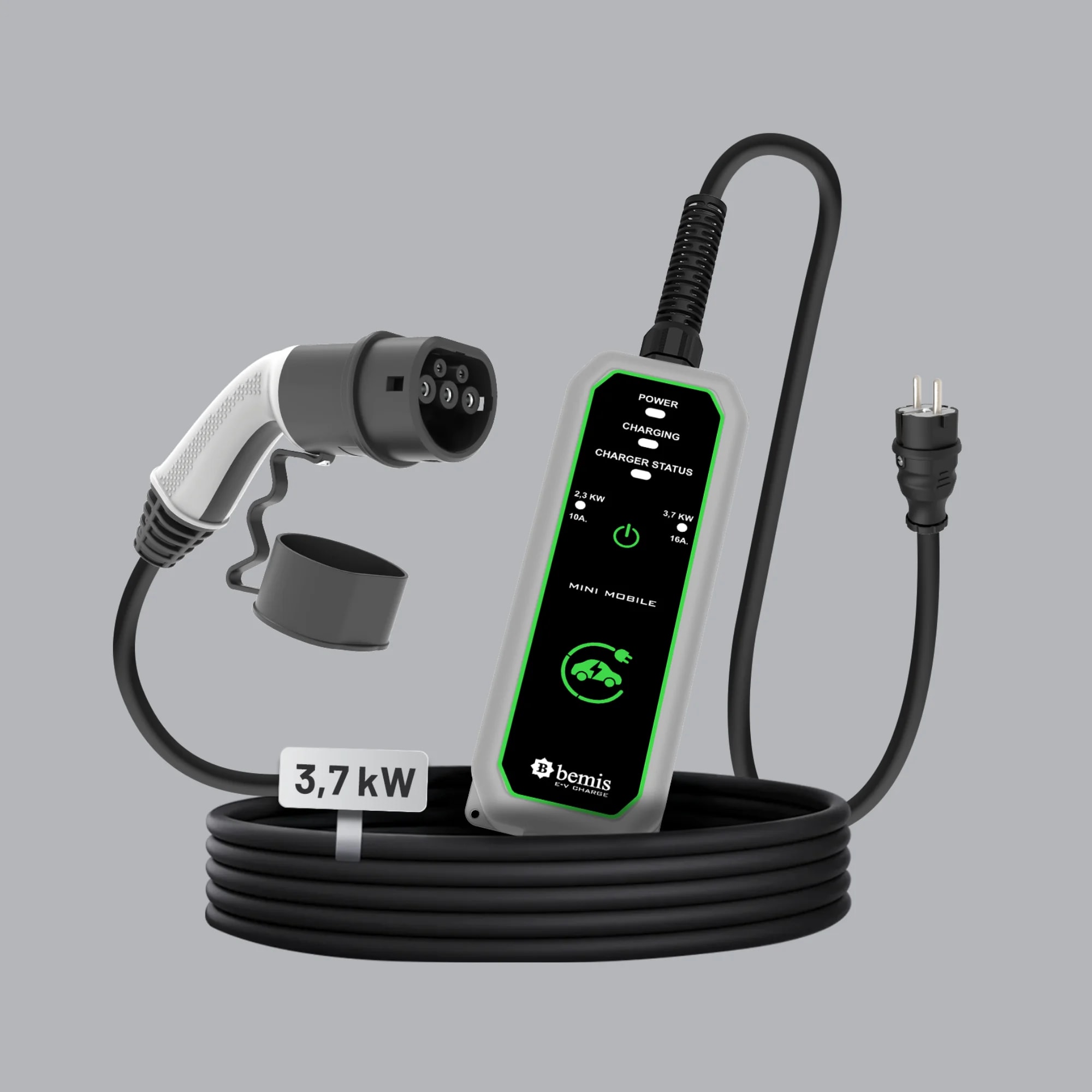
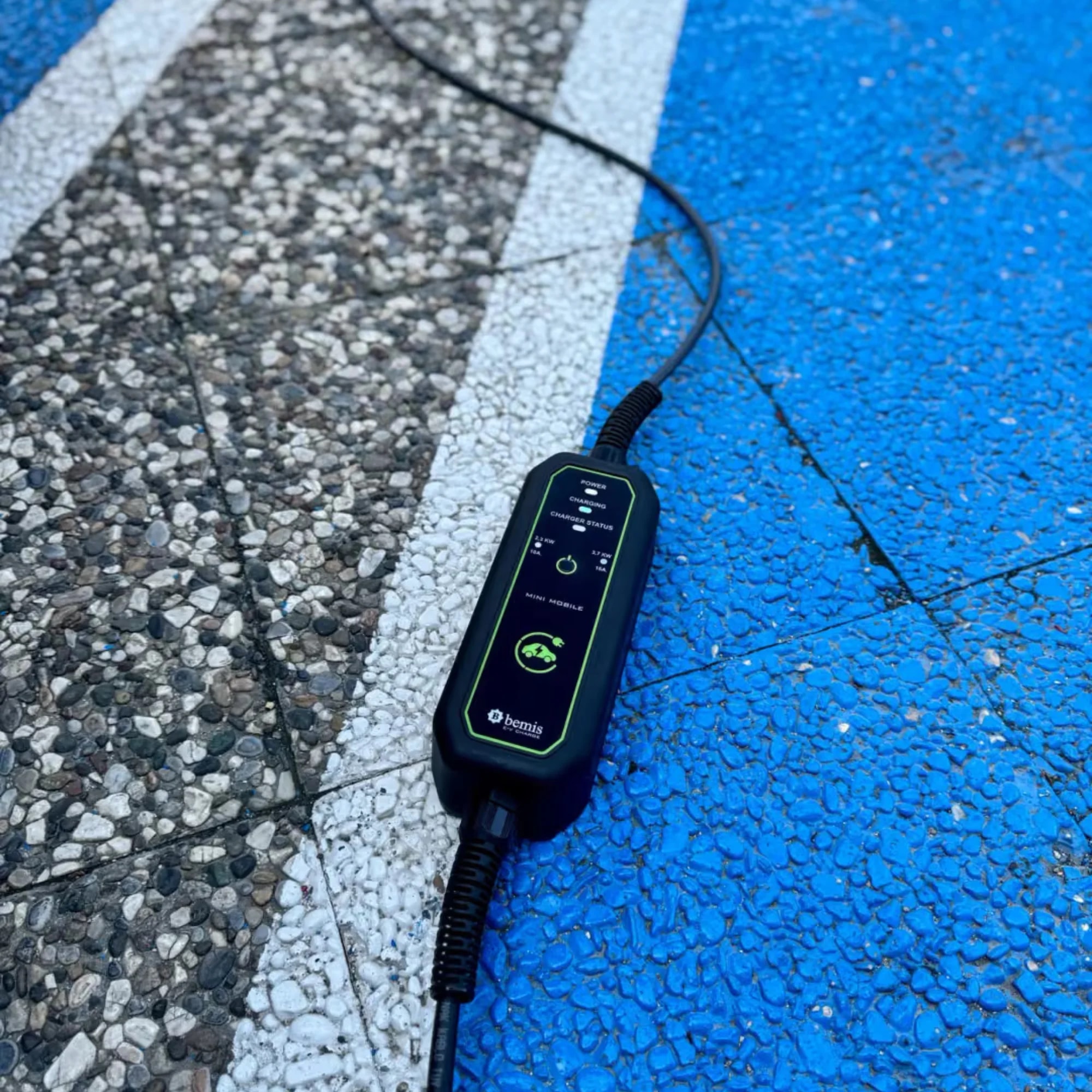
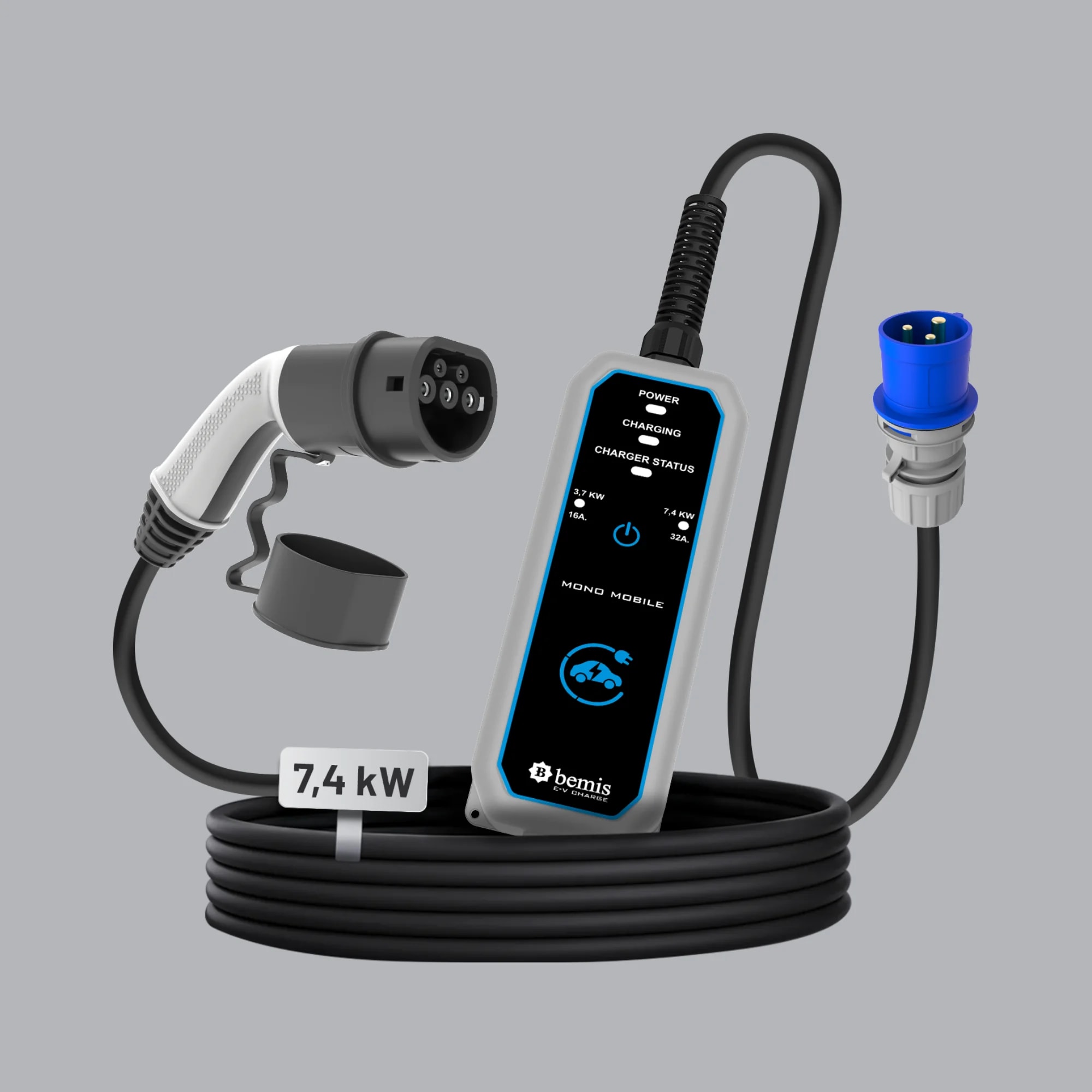
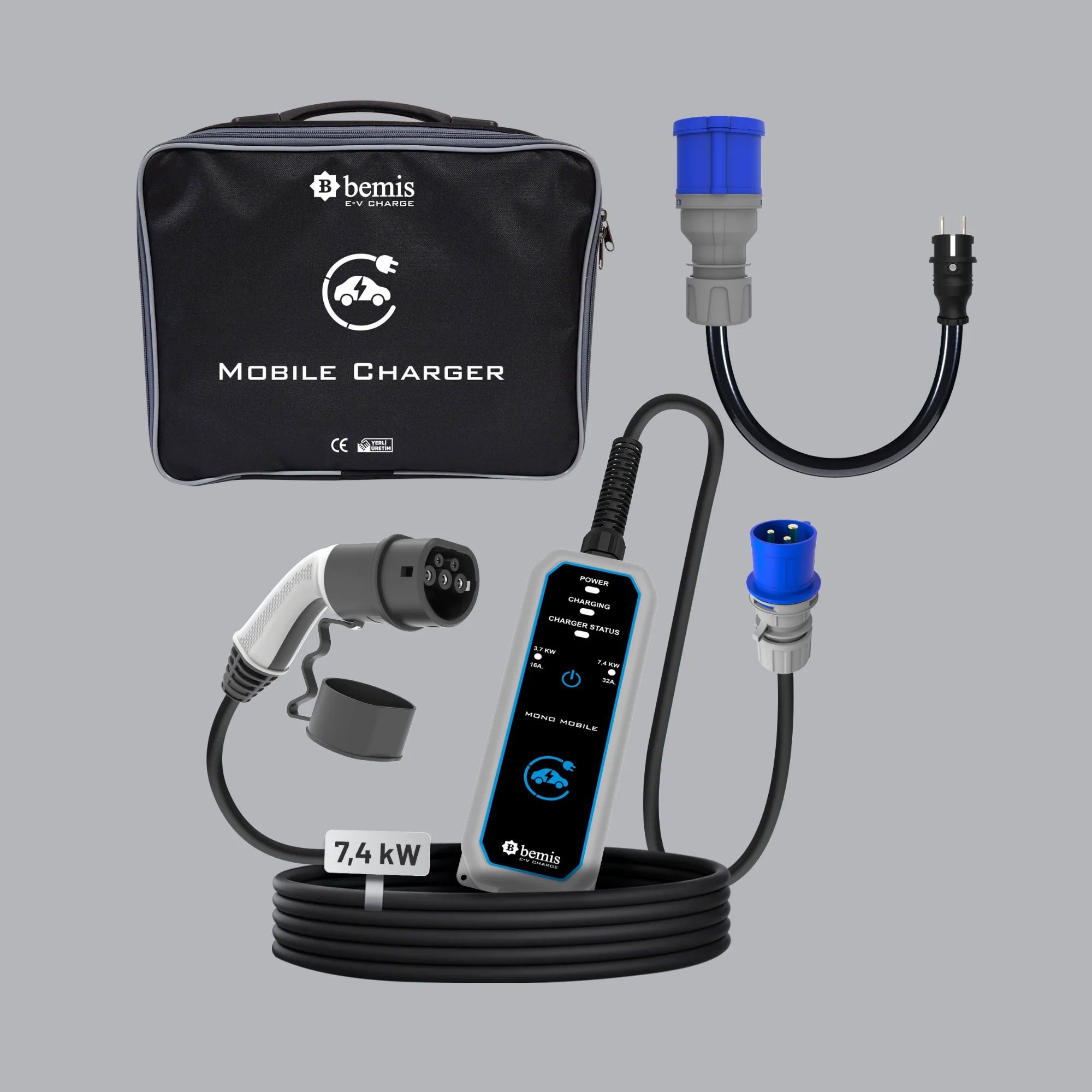
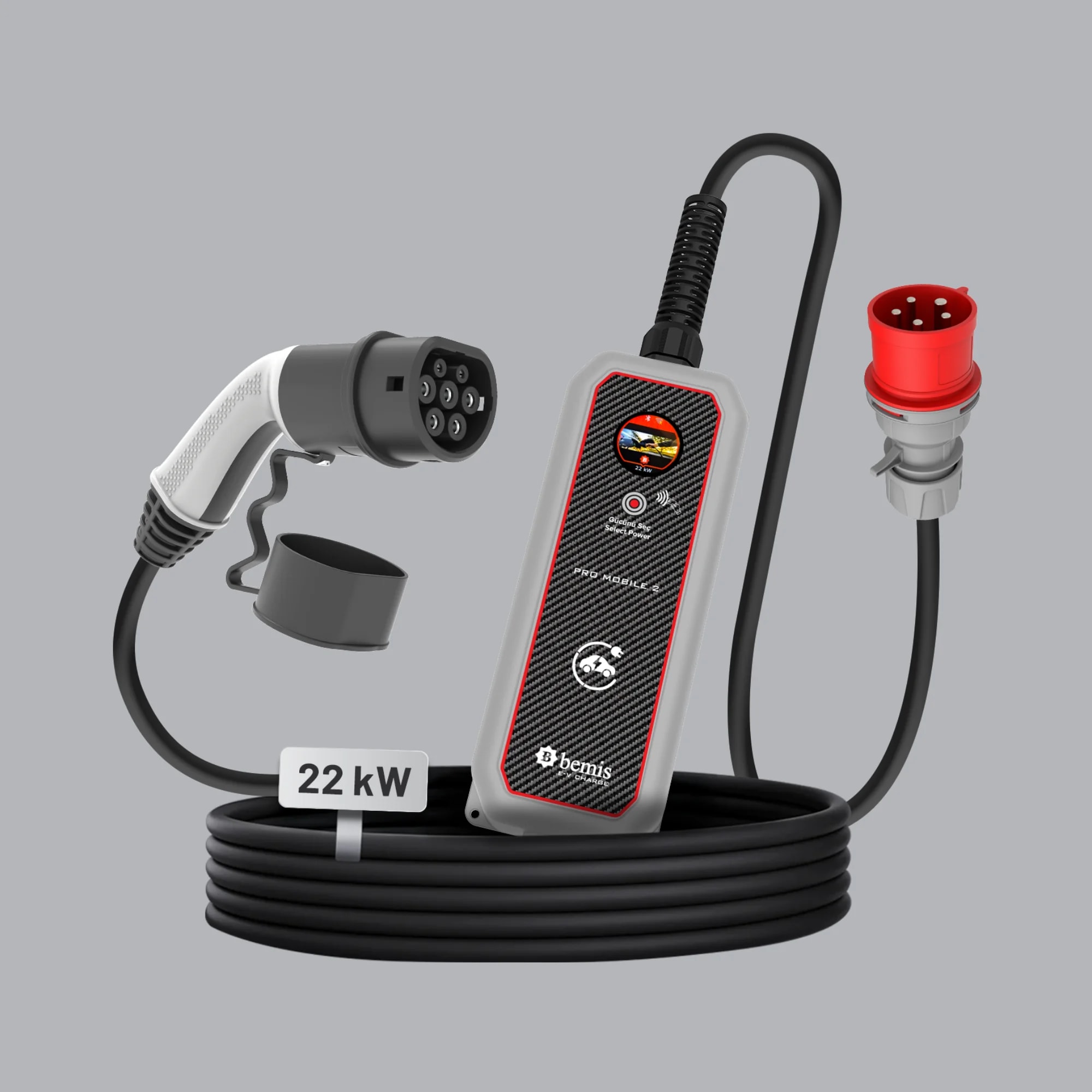
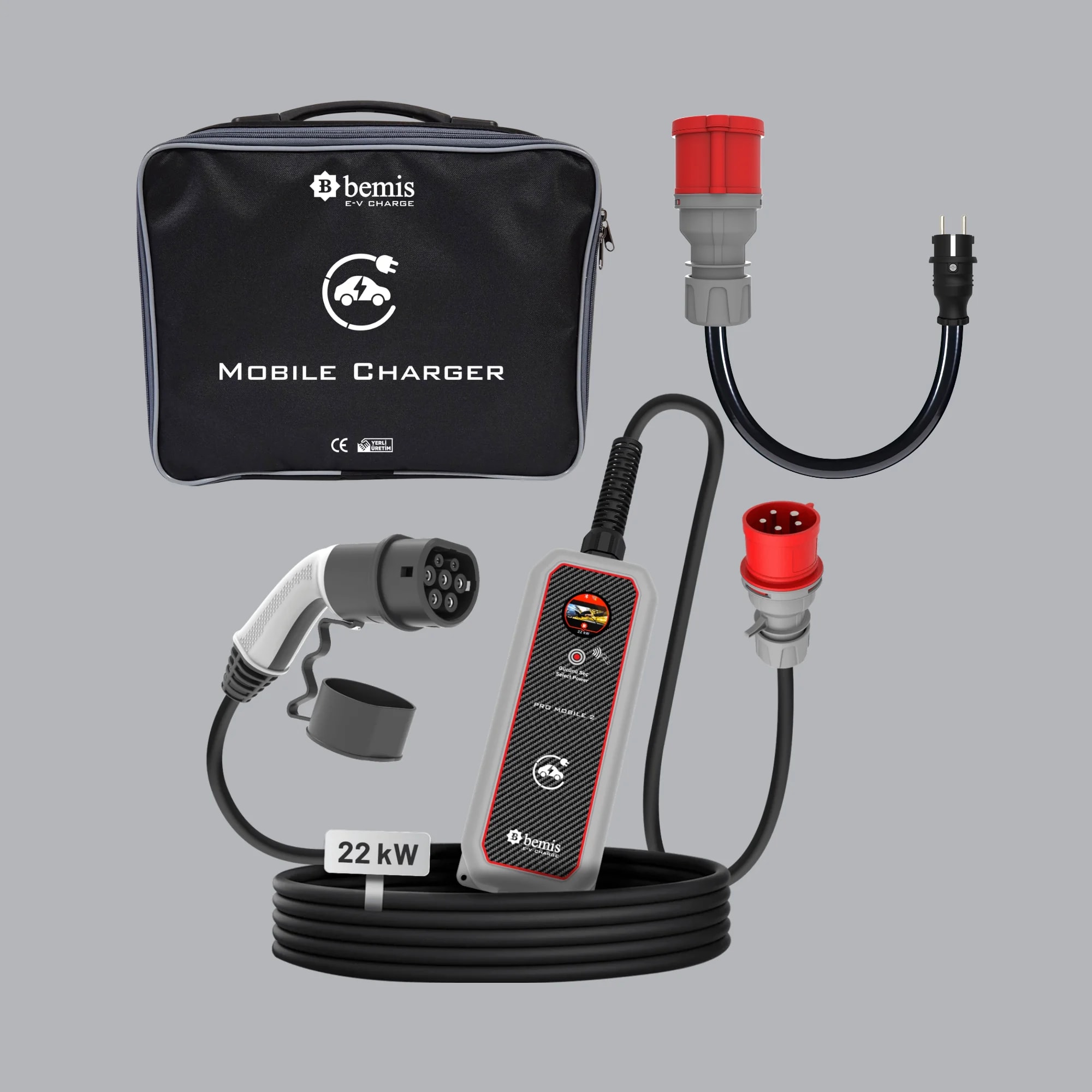
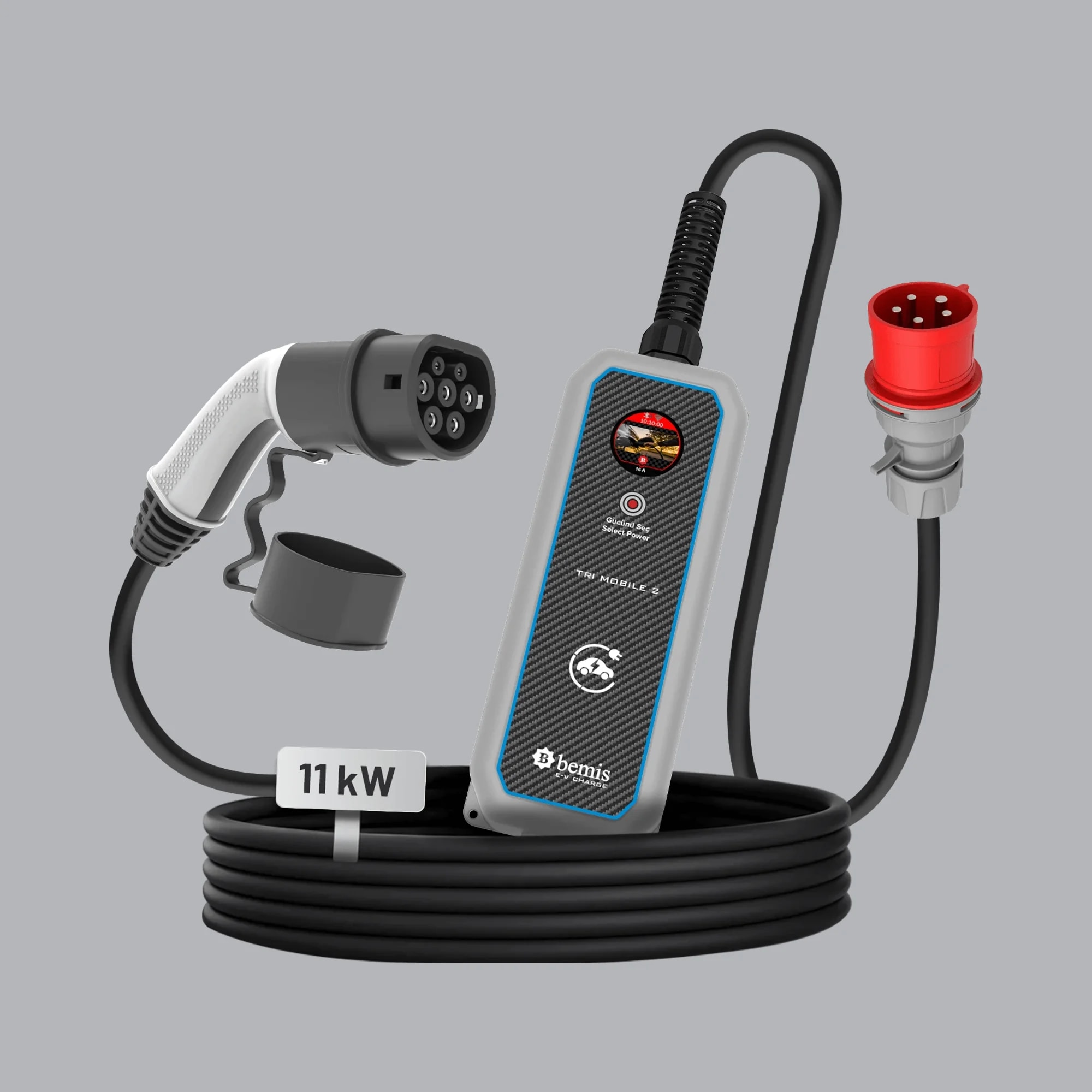
Portable EV chargers: models and prices
Portable EV charger prices depend on the socket the charger plugs into and its power: the Mini Mobile for household sockets is the most affordable, the Mono Mobile for a blue 32 A socket sits in the middle, and the Tri Mobile 2 (11 kW, red 5/16A three-phase socket) and Pro Mobile 2 (22 kW, red 5/32A) are the fastest. Models on our site start at $267.90; all have a Type 2 connector, an IP65 housing and a carry bag, and need no installation.
A portable EV charger (also called a Mode 2 or granny cable) plugs into a socket at one end and your car at the other, with no installation. The socket you will use decides the model:
- Standard household socket (Schuko): Mini Mobile, 2.3–3.7 kW. Works anywhere; charging is slow.
- Blue 32 A industrial socket (single-phase): Mono Mobile, up to 7.4 kW; 3.7 kW with the household adapter.
- Red 5-pin industrial socket (three-phase): Tri Mobile 2 (5/16A, 11 kW) or Pro Mobile 2 (5/32A, 22 kW) – wallbox speed.
Choose the cable length by measuring from the socket to your car's charging port and adding 1–2 m. Household extension leads and power strips are not rated for charging currents; if needed, use a suitably rated heavy-duty extension cable. If you charge in the garage every day, a fused combination socket with residual current protection is recommended.
Portable charger prices and models compared
| Model | Socket | Power | Cable | Price |
|---|---|---|---|---|
| Bemis Mini Mobile | Household socket (Schuko) | 2.3–3.7 kW, single-phase | 5 / 8 / 10 m | $267.90 |
| Bemis Mono Mobile | Blue 3/32A CEE + household adapter | 3.7–7.4 kW, single-phase | 5 / 8 / 10 m | $308.90 |
| Bemis Tri Mobile 2 | Red 5/16A CEE + adapter | 11 kW, three-phase | 5 / 8 / 10 m | $364.90 |
| Bemis Pro Mobile 2 | Red 5/32A CEE + adapter | 22 kW, three-phase | 5 / 8 / 10 m | $400.90 |
Price is for the shortest cable; longer cables cost a little more. Prices update daily with the exchange rate.
Our guide explains how many kW you get from each socket, whether your socket and circuit are suitable, and how to choose the cable length. If the socket is far from the car, use a heavy-duty extension of the right cross-section rather than a household lead; for daily charging in a garage, use a combination socket with its own breaker and RCD.
- → Portable EV charger: which one to buy?
- → Can you charge with an extension cord?
- → Charging adapters and extension cables
- → Charging accessories (bags, wall brackets)
All electric cars with a Type 2 port: Togg, Tesla, BYD, MG, Hyundai, Kia, Renault, BMW, Mercedes and others.
The Mini Mobile starts at $267.90 and the Mono Mobile at $308.90. The Tri Mobile 2 (11 kW) costs $364.90 and the Pro Mobile 2 (22 kW) $400.90 (5 m cable). Prices update daily with the exchange rate.
All four models come with 5, 8 or 10 m cables; longer costs slightly more. For example, the Mono Mobile is $308.90 with 5 m, $328.90 with 8 m and $344.90 with 10 m.
All four models come with a carry bag. The Mono Mobile, Tri Mobile 2 and Pro Mobile 2 also include an adapter for household sockets; the Mini Mobile already has a household plug. The wall bracket is sold separately.
Portable chargers in stock ship within 1–3 working days. If you are in Bursa, you can collect your order from our store in Nilüfer.