Surge Protective Devices
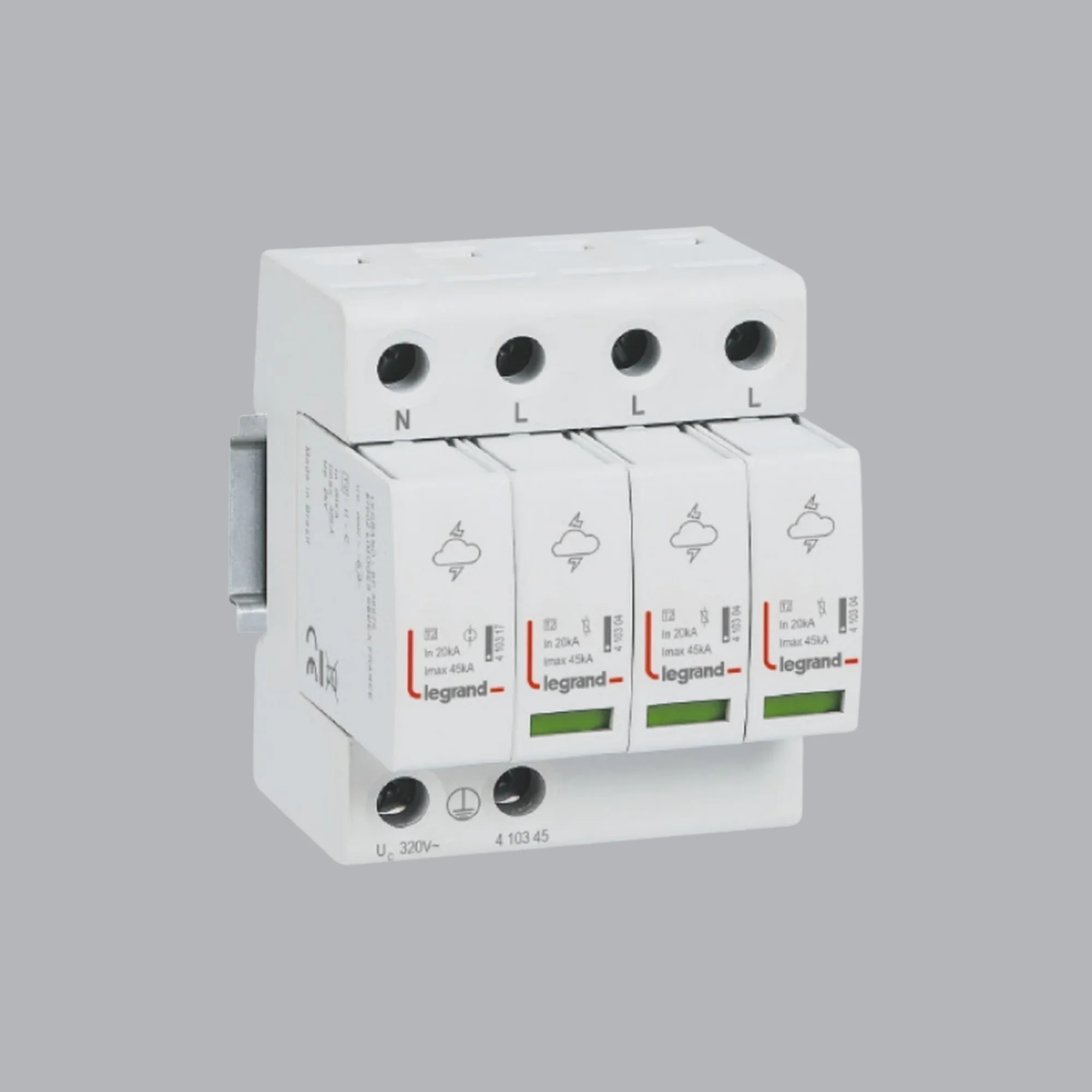
What is a surge protector and how to choose one
A surge protective device (SPD) diverts short high-voltage surges from lightning or grid switching to earth and protects appliances. Circuit breakers and RCCBs do not protect against such surges; TVs, computers, boiler boards, air conditioners and EV chargers need an SPD.
- Type: Type 2 (T2) in the main panel after the meter; Type 1 or T1+T2 at the origin of buildings with a lightning rod or overhead supply.
- Poles: 1-pole + neutral for single-phase, 3-pole + neutral for three-phase.
- Discharge current (Imax): the higher the value, the larger the surge it can handle.
- Earthing: an SPD only protects with good earthing.
An SPD is one of the mandatory protections in our EV charger installations. Our guide explains how it works and how to choose one.
It protects electronics against lightning and grid overvoltages and is recommended especially in lightning-prone areas, buildings with overhead supply and installations with expensive electronics such as EV chargers, boilers and air conditioners. Local rules may require it.
T1 handles direct lightning current at the building origin, especially with a lightning rod. T2 is used in the panel after the meter against grid and indirect lightning surges. Both can be combined.
No. It diverts the surge to earth; without proper earthing it cannot protect.