Circuit Breakers (MCB)
How to choose a circuit breaker
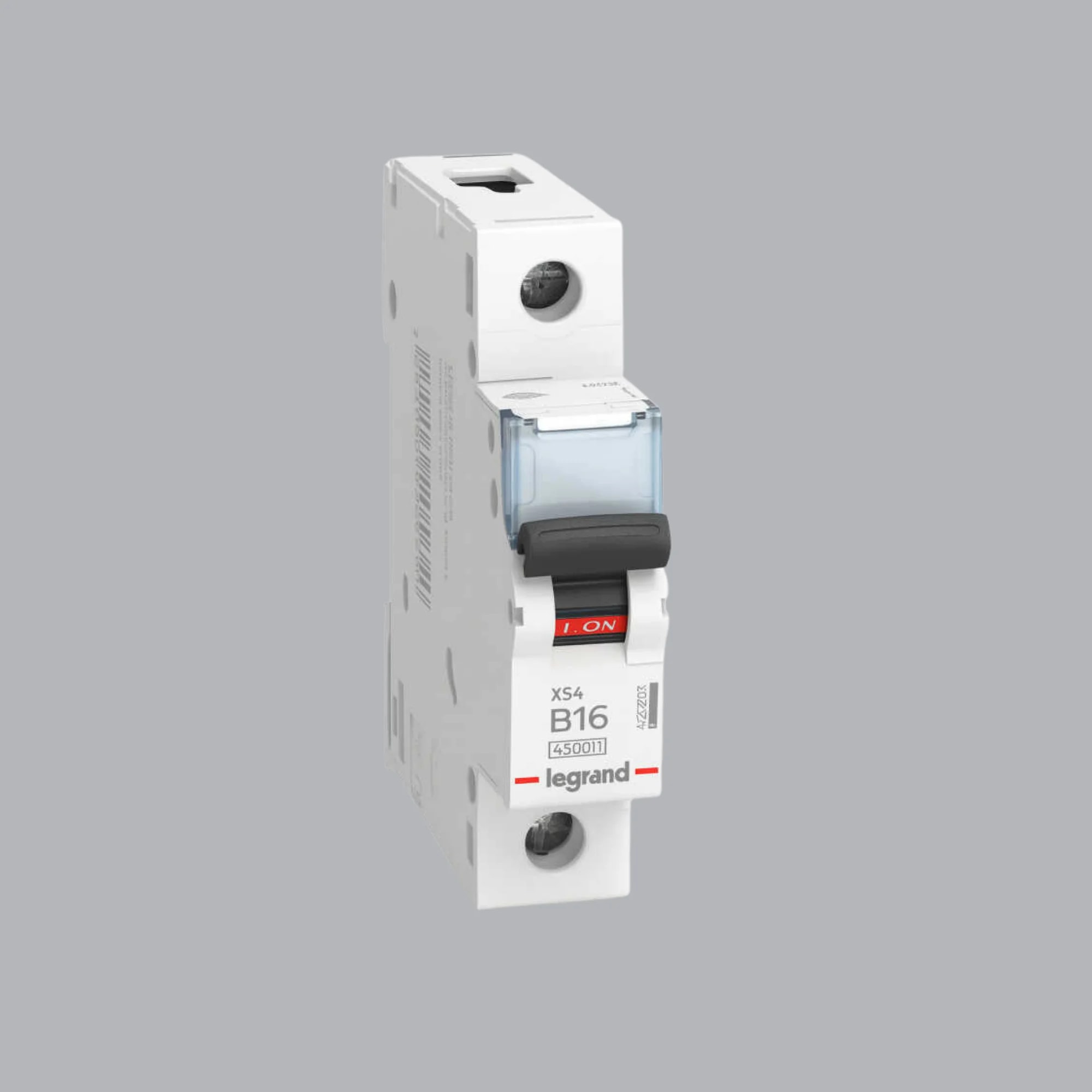
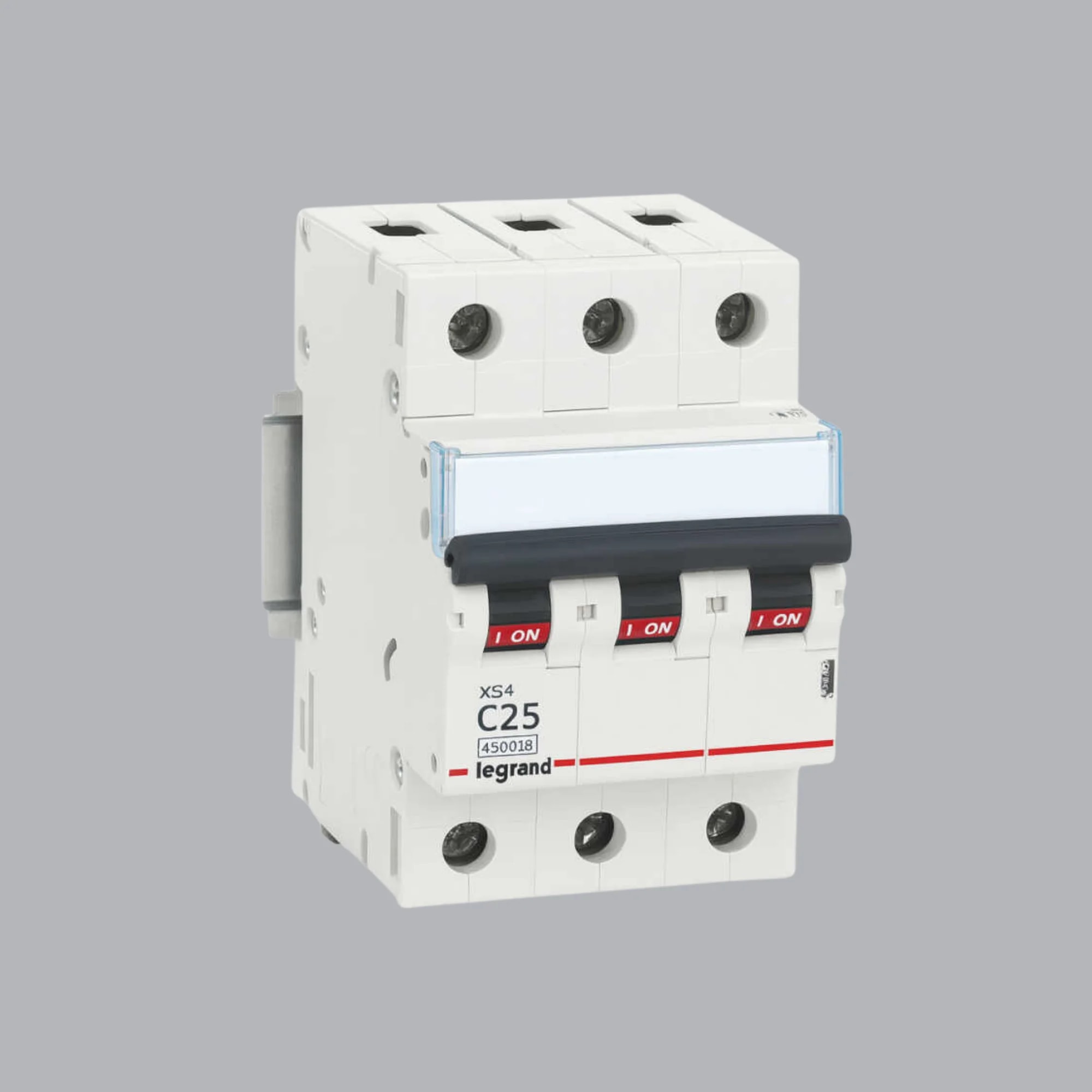
Four things matter when choosing a miniature circuit breaker: number of poles, rated current (amps), tripping curve (B or C) and breaking capacity.
- Poles: 1-pole for single-phase circuits, 3-pole for three-phase circuits and equipment.
- Rating: chosen according to the cross-section of the protected cable; typically 10 A for lighting with 1.5 mm² and 16 A for sockets with 2.5 mm².
- Curve: B for lighting and socket circuits, C for motors, compressors and air conditioners with high inrush current.
- Breaking capacity: 4.5 kA is usually enough for homes and small businesses.
The Legrand XS4 range covers 6–63 A, curves B and C, with 4.5 kA breaking capacity, made in Türkiye. A bigger breaker does not solve nuisance tripping – the cable overheats. Our guides explain cable sizes and breaker selection; local wiring rules apply.
Usually 2.5 mm² copper cable on socket circuits; lighting circuits with 1.5 mm² cable use 10 A. The exact choice depends on installation method, cable length and local rules.
A single-phase breaker protects one phase (1 pole), a three-phase breaker protects all three together (3 poles) and disconnects all three if one phase has a fault – needed for three-phase motors and EV chargers.
The letter shows the tripping curve (B or C) and the number the rated current in amps – for example C16 is a curve C, 16 A breaker.